The roundhouse kick is one of the most widely used strikes in martial arts, appearing in Muay Thai, kickboxing, karate, and taekwondo. Although each discipline has its own approach, the basic principle remains similar: the kicking leg travels along a curved path, with the hips, supporting foot, and torso working together to deliver the strike.
A powerful roundhouse kick requires more than leg strength. Distance, timing, hip rotation, and balance all influence how effectively the strike reaches its target. Poor foot positioning can restrict movement and place unnecessary stress on the supporting knee, while incorrect contact may result in injury.
Learning the technique involves understanding how the body moves, choosing the appropriate striking surface, and developing a reliable recovery. These fundamentals provide the foundation for faster, more accurate kicks without sacrificing defensive control.
What Is a Roundhouse Kick?
A roundhouse kick is a rotational strike delivered along a curved trajectory, usually toward an opponent’s leg, body, or head. Unlike a front kick, which travels primarily forward, the roundhouse approaches from the side as the hips rotate. Low roundhouse kicks commonly target the thigh or, where permitted, the calf. Middle kicks typically reach the ribs or torso, while high kicks are directed toward the head. Each requires different positioning, flexibility, and distance control. The technique changes considerably between martial arts. Muay Thai fighters typically use the shin, driving the leg through the target with substantial hip rotation.
Karate often employs a chambered motion, in which the knee bends before the lower leg extends. Depending on the style, contact may be made with the instep or ball of the foot. In taekwondo, the roundhouse kick, known as dollyeo chagi, frequently emphasizes rapid chambering, precise contact, and quick recovery. These qualities are particularly valuable in competitive sparring, where timing and scoring accuracy matter. Despite their differences, all these approaches require coordinated movement and enough balance to defend or attack immediately afterward.
How to Perform a Roundhouse Kick Step by Step
Good kicking mechanics start with the right stance and distance. The hips need room to rotate, while the intended striking surface must reach the target without forcing the fighter to lean or stretch excessively. The following instructions describe a basic rear-leg roundhouse kick. Specific details, particularly knee chambering, contact surface, and follow-through, should match the martial art being practiced.
Stance, Pivot and Hip Rotation
Begin in a comfortable fighting stance, with one foot slightly behind the other and the feet roughly shoulder-width apart. Keep the knees relaxed, chin tucked, and hands positioned to protect the head. Distribute your weight so you can move either foot without a large preparatory shift. An overly rigid stance makes rotation difficult and can telegraph the attack. To perform the kick:
- Find the correct distance. Position yourself so the intended striking surface can reach the target cleanly. A shin-based kick generally requires different spacing than one delivered with the instep or ball of the foot.
- Turn the supporting foot. Pivot on the ball of the lead foot, allowing the toes to turn away from the target as the hips open.
- Rotate the hips. Drive the rear hip into the strike while allowing the shoulders and torso to turn in coordination.
- Bring the kicking leg around. Use a chambered knee position or a continuous swinging motion, depending on the technique.
- Make controlled contact. Strike with the intended surface, then retract the leg or complete the follow-through as appropriate.
The supporting foot should turn naturally with the hips. Keeping it planted while forcing the pelvis to rotate can place unnecessary twisting stress on the knee. Pivot angles vary. A committed Muay Thai body kick generally involves substantial rotation, whereas some faster chambered techniques use a shorter turn. The important point is allowing the hip to drive the kick rather than leaving it behind the moving leg.
Contact, Balance and Recovery
Where the kick makes contact depends on the discipline, target, and rules. In Muay Thai and many kickboxing styles, fighters typically strike with the shin rather than the foot. The exact point of contact varies with distance and target placement. Karate and taekwondo frequently use the instep for certain roundhouse kicks. Some karate techniques instead strike with the ball of the foot, requiring the toes to be pulled back to expose the correct contact surface. These methods are not interchangeable.
A contact surface suitable for one target or ruleset may be inappropriate for another. At impact, the striking leg needs sufficient muscular tension to remain controlled, but the entire body should not stiffen prematurely. The supporting leg should remain stable without forcing the knee into a rigid, locked position. High roundhouse kicks often require the torso to lean away from the kicking leg. This adjustment can improve reach and positioning, but excessive leaning may disrupt balance and delay recovery. Arm movement also differs between styles. Muay Thai fighters sometimes swing the arm on the kicking side downward or backward to assist rotation, while other disciplines emphasize maintaining a tighter guard. Arm positioning should support the movement without unnecessarily exposing the head to counterattacks.
Recovery depends on the type of kick. Chambered techniques generally retract the lower leg before returning to stance. After a powerful Thai-style kick, the fighter may retract the leg or step back into position. A missed strike can require continued rotation or an additional step to regain balance. After the kick, the fighter should be able to strike again, defend, or move away without unnecessary repositioning.
Roundhouse Kick Variations in Different Martial Arts
Competition rules and tactical priorities have produced several distinct approaches to the roundhouse kick. Some favor quick, controlled contact, while others emphasize forceful strikes that disrupt an opponent’s balance or movement.
Muay Thai Roundhouse Kick
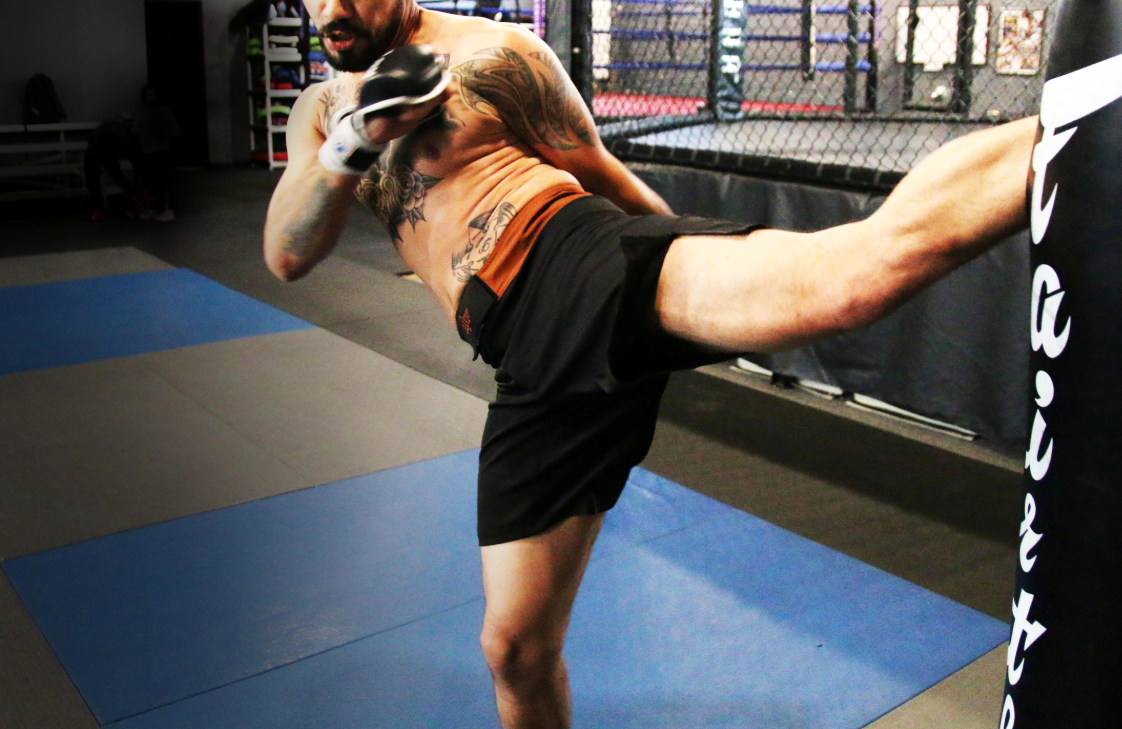
The Muay Thai roundhouse kick is characterized by strong hip rotation and frequent use of the shin as the striking surface. Rather than relying mainly on rapid knee extension, fighters swing the leg through the target as the supporting foot and pelvis rotate. The kicking leg is often relatively extended during the main striking phase, although the knee is not necessarily locked. Low kicks primarily target the inside or outside of the thigh. Calf kicks also appear in some modern striking formats, although their use and frequency vary between disciplines. Body kicks target the ribs, arms, or midsection, while high kicks can reach the head. Distance is especially important. If the fighter stands too close, the shin may not contact the intended area cleanly. From too far away, the kick loses structure as the athlete stretches toward the target. Thai-style kicks are also frequently set up with punches, feints, and footwork. A well-timed kick can interrupt an opponent’s movement or exploit an opening created by an earlier attack.
Karate Roundhouse Kick
In karate, the roundhouse kick is generally called mawashi geri. Its mechanics vary across styles and competitive formats. A common version begins by lifting and bending the kicking leg. As the supporting foot turns and the hips rotate, the lower leg extends toward the target. A controlled chamber can make it harder for an opponent to distinguish between body and head kicks. It also allows the leg to retract quickly after contact. Some karate systems emphasize the ball of the foot, while others use the instep. The choice depends on the technique, intended target, and training context. In point-based competition, accuracy, timing, and controlled contact are particularly important. A fighter must deliver a recognizable scoring technique without losing the ability to stop or recover the movement.
Taekwondo Roundhouse Kick
The dollyeo chagi is one of taekwondo’s most frequently used kicks, particularly in sparring. In a typical chambered version, the knee lifts as the supporting foot turns and the hips rotate into position. The lower leg then extends toward the target, commonly making contact with the instep. Modern sport taekwondo places considerable value on speed, accuracy, and the ability to score from different angles. Competitors use both lead-leg and rear-leg kicks, often combining them with sliding steps, feints, and rapid changes of distance. A lead-leg roundhouse can reach the target quickly because the kicking foot begins closer to the opponent. It is particularly useful for intercepting an advancing fighter or exploiting a brief opening.
The rear-leg version generally requires more initial movement but can generate substantial force through a longer rotational action. Neither variation is automatically superior. The lead leg offers opportunities for quick attacks, while the rear leg can be effective when distance and timing allow greater hip involvement. Efficient recovery matters in both cases because a missed or poorly controlled kick can leave the athlete exposed to an immediate counterattack.
Kickboxing Roundhouse Kick
Kickboxing includes several competitive formats, so its roundhouse techniques vary between organizations and training systems. Many low-kick and K-1-style approaches use shin-based kicks similar to those in Muay Thai. Other formats incorporate more chambered movements, particularly for head-level attacks. Punching combinations play an important tactical role. A jab or cross can occupy an opponent’s guard and attention, creating an opening for a kick to the body or leg. Kickboxers also need to recover quickly into a stance suitable for defending punches. A powerful kick becomes a liability if it leaves the athlete off-balance or unable to respond to a counter.
Which Muscles Are Used in a Roundhouse Kick?
A roundhouse kick recruits muscles throughout the hips, legs, and trunk. Different muscle groups take on different roles as the athlete lifts the leg, accelerates toward the target, prepares for contact, and recovers. The gluteus maximus contributes to hip extension and external rotation, while the gluteus medius and minimus help stabilize the pelvis, particularly on the supporting side. Hip flexors assist in lifting and positioning the kicking leg. The quadriceps extend the knee, especially in chambered techniques, while the hamstrings help control knee movement and decelerate the leg during recovery. The adductors contribute to hip control and help guide the leg along its intended path. Their involvement varies with kicking height and technique.
On the supporting side, the calf and ankle muscles assist with balance and foot positioning as the body rotates. The abdominal muscles, particularly the obliques, help coordinate trunk rotation. Muscles surrounding the spine maintain posture and control the relationship between the torso and pelvis. Strength in these muscle groups supports kicking performance, but it does not replace coordination. Effective force delivery depends on how well the different parts of the body work together, not simply how strong the kicking leg is.
Common Roundhouse Kick Mistakes
Many roundhouse kick problems come from poor timing or positioning rather than a lack of strength. Increasing power before correcting these errors usually makes them more noticeable.
- Failing to pivot the supporting foot. A planted foot restricts hip rotation and can place unnecessary twisting stress on the knee. Allow the supporting leg to turn with the movement rather than forcing rotation through a fixed joint.
- Kicking with the lower leg alone. Rapid knee extension is important in many chambered kicks, but it must be coordinated with hip rotation and proper positioning to deliver an effective strike. Extending the lower leg without sufficient pelvic involvement can compromise both reach and impact.
- Leaning too far backward. A controlled torso adjustment is normal, especially for high kicks. Unnecessary leaning, however, shifts the center of mass away from the supporting foot and makes recovery harder.
- Using the wrong striking surface. Accidental contact with the toes or an unintended part of the foot can cause injury, particularly against hard targets. Establish the correct distance and contact point before increasing power.
- Dropping the guard without purpose. Some techniques use a deliberate arm swing, but lowering both hands or turning the head away creates openings for counterattacks. Keep defensive positioning consistent with the technique.
- Telegraphing the kick. An exaggerated weight shift, large preparatory step, or unnecessary shoulder movement can reveal the attack. Efficient positioning allows the kick to begin with less warning.
- Neglecting recovery. A kick that ends with an uncontrolled landing or several corrective steps leaves the fighter vulnerable. Practice returning to stance as part of each repetition. Correct these problems with controlled repetitions before returning to high-speed or full-power training.
Drills to Improve Roundhouse Kick Technique
Technical drills should come before full-speed or full-power kicking. Each exercise develops a specific part of the movement, from supporting-foot rotation to accurate contact and recovery.
Slow Technical Repetitions
Practice the kick at a controlled pace without attempting maximum power. Begin in stance, turn the supporting foot, rotate the hips, and guide the leg toward an imaginary target. Pause briefly at comfortable positions to assess balance and alignment. For chambered kicks, concentrate on knee positioning and retraction. For Thai-style kicks, maintain a smooth rotational action rather than forcing a sharp extension of the lower leg. Slow repetitions are useful for identifying unnecessary tension, restricted movement, and inconsistent coordination.
Pivot and Balance Drill
Start in a fighting stance and practice rotating on the ball of the supporting foot without completing the kick. Let the supporting knee turn naturally with the foot and hip instead of twisting against a planted foot. Keep the movement comfortable and controlled. Once the pivot feels consistent, add a knee lift or partial kick. This introduces the connection between foot positioning and hip movement without the demands of a full strike.
Pad Work
Thai pads and kicking shields provide a target for developing distance control, accuracy, and impact mechanics. Begin with moderate contact, concentrating on reaching the pad with the intended striking surface. Adjust your distance rather than leaning or stretching to make contact. The pad holder should understand the technique and position the equipment securely. Poor placement can encourage awkward movement or cause unintended contact. After several kicks, check whether you can return to stance without stumbling or taking unnecessary corrective steps. Repeatedly losing balance may indicate problems with distance, excessive momentum, or poor control of the supporting leg. As accuracy and balance improve, gradually increase speed and force while preserving the same movement quality.
Shadowboxing and Combination Practice
Shadowboxing develops kicking technique without relying on a target for support. Practice entering range, delivering the kick, and returning to a defensive position. Alternate single strikes with short combinations. A jab-cross-rear roundhouse sequence, for example, helps connect punching mechanics with the transition into a kick. The appropriate target and footwork depend on the ruleset. Vary the pace instead of throwing every kick at maximum speed. Controlled repetitions make it easier to recognize unnecessary movements and improve transitions.
Controlled Partner Drills
Partner exercises introduce moving targets, changing distance, and defensive reactions. One partner can hold a pad at different appropriate heights while the other selects and delivers the corresponding kick. More advanced exercises may include feints, defensive steps, and controlled counterattacks. The level of contact should suit both partners’ experience and protective equipment. Technical sparring should emphasize timing, positioning, and control rather than maximum impact.
How to Practice Roundhouse Kicks Safely
Roundhouse kicks place rotational and impact demands on the hips, knees, ankles, and feet. Proper preparation and gradual progression help reduce unnecessary injury risk. Begin with a warm-up that raises body temperature and prepares the joints for movement. Light footwork, controlled leg swings, and progressively higher kicks can prepare the body for technical practice. Avoid forcing kicks above your available range of motion. Attempting high kicks without sufficient mobility or strength often leads to uncontrolled leaning and poor hip positioning. Pay attention to the training surface.
The supporting foot needs enough traction for balance but must still be able to pivot. Excessive grip can restrict rotation, while slippery flooring increases the risk of losing footing. Use suitable equipment for contact training. Pads, shields, and heavy bags should be secure and appropriate for the technique being practiced. Beginners should build reliable mechanics before attempting repeated hard strikes. Poor contact against unsuitable surfaces can cause bruising or injuries to the shin, foot, or ankle.
Flexibility alone is not enough for high kicks. Active mobility and strength throughout the available range of motion help maintain control as the leg rises. Training volume matters as well. Repeated high-impact kicks can overload tissues that have not adapted to the workload, particularly when intensity increases too quickly. Stop if a kick produces sharp pain in the knee, hip, ankle, or foot. Persistent symptoms should be assessed by a qualified healthcare professional rather than treated as a normal part of training. For beginners, instruction from an experienced coach is especially useful. Small corrections to stance, distance, and movement can prevent inefficient habits from becoming established.
FAQ
Is a roundhouse kick the same as a round kick?
In most English-language martial arts contexts, roundhouse kick and round kick describe the same general family of curved, rotational kicks. The precise mechanics vary between disciplines, so the terms do not always refer to an identical movement.
Should a roundhouse kick hit with the shin or foot?
Both are used. Muay Thai commonly emphasizes shin contact, while karate and taekwondo often use the instep for certain variations. Some karate techniques strike with the ball of the foot. The appropriate surface depends on the style, target, and rules.
How can beginners improve roundhouse kick power?
Practice hitting a pad at the correct distance while coordinating the supporting-foot pivot with hip rotation. Focus on clean contact and a stable landing before adding speed. Once those elements become consistent, gradually increase the force of each strike.
Why does my supporting knee hurt when throwing roundhouse kicks?
Pain may occur when the supporting foot does not rotate adequately, the knee twists under load, or training intensity exceeds current capacity. Other injuries or conditions can produce similar symptoms. Stop painful movements and seek professional assessment if the discomfort persists.
How long does it take to learn a roundhouse kick?
Most beginners can learn the basic movement within their first few training sessions. Developing consistent balance, accuracy, and timing against moving opponents takes considerably longer. Progress depends on coaching, mobility, coordination, and regular practice.